
Home > Regions > Due Diligence in Latin America
Due Diligence in Latin America
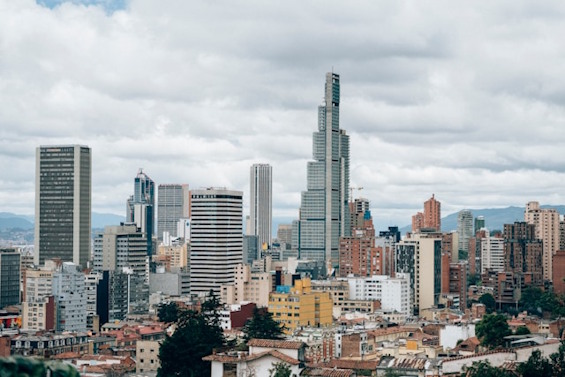
Latin America offers some of the most dynamic growth opportunities in the world, from nearshoring and critical-minerals investment to a fast-expanding consumer market. However, the region also presents a distinctive set of integrity and political risks: political cycles tend to be volatile, regulatory frameworks change frequently, and the quality and accessibility of public records vary enormously from one country to the next. In its 2025 Corruption Perceptions Index (CPI), published in February 2026, Transparency International gave the Americas an average score of just 42 out of 100, describing the region as showing no overall progress in the fight against corruption.
Against this backdrop, thorough integrity due diligence (or enhanced due diligence) is essential for any company entering a joint venture, acquisition, distribution agreement or supply-chain relationship in the region.
Challenges of investigative due diligence in Latin America
The principal challenge in Latin America is the uneven availability and reliability of public information. Some jurisdictions maintain accessible corporate and litigation records, while in others the registries are incomplete, costly to access, or effectively closed to outside enquiry. Beneficial ownership is frequently obscured behind layers of holding companies, family structures and nominee arrangements, and shareholding information is often not available through official channels.
For this reason, registry checks must be supplemented by extensive open-source investigations, media research and third-party database searches. Crucially, this research has to be conducted in the local language. Working in Spanish across Spanish-speaking Latin America - rather than relying on translated sources - allows us to access a far richer and more accurate picture of any subject, including regional and local-language media that rarely surfaces in English.
Latin America expertise
At Maddocks Insight, we combine linguistic capabilities in Spanish and English with the political and economic expertise needed to conduct investigative due diligence across Latin America, including:
Mexico, Guatemala, Honduras, El Salvador, Nicaragua, Costa Rica, Panama, Colombia, Venezuela, Ecuador, Peru, Bolivia, Chile, Argentina, Uruguay and Paraguay.
Specific features of due diligence research in Latin America
There are a number of considerations to keep in mind when performing integrity due diligence in Latin America:
- Wide variation in transparency - perceived levels of public-sector corruption differ sharply across the region. In Transparency International's CPI 2025, Uruguay scored 73 and Chile 63, while Venezuela scored 10, Nicaragua 14 and Haiti 16. Major economies occupy a broad range of positions, including Costa Rica (56), Colombia (37), Argentina (36), Brazil (35) and Mexico (27). The research strategy must be tailored to the realities of each jurisdiction.
- Organised crime and political infiltration - in a number of countries, corruption is intertwined with organised crime. Transparency International specifically highlighted the infiltration of organised crime into politics in Mexico. This is a nexus that creates heightened compliance and security risks for businesses operating in affected areas.
- Politically exposed persons (PEPs) and shifting regimes - sometimes abrupt changes of government mean that a subject's political connections can become a liability (or an asset) almost overnight. Links to current and former officials need to be assessed carefully and should be reviewed regularly as part of an ongoing political risk assessment.
- Sanctions exposure - companies should screen subjects, directors, shareholders and ultimate beneficial owners against applicable sanctions lists and assess any exposure to sanctioned parties or restricted activities. This is particularly important in relation to Venezuela-related sanctions and other country-specific or thematic sanctions regimes affecting individuals and entities in the region.
- Anti-bribery and anti-money-laundering risk - companies need to guard against bribery, kickbacks and money-laundering schemes that could create exposure under the US Foreign Corrupt Practices Act, the UK Bribery Act or equivalent legislation.
- Alternative sources of information - where official records and local reporting are limited, investigative journalism outlets, court filings, social media and other open sources become valuable means of identifying red flags. Where a transaction has already gone wrong, this same research underpins our litigation support and asset tracing work.
Doing business in Latin America requires careful, locally-informed due diligence. By investigating thoroughly and in the local language, businesses can make better-informed decisions, minimise their exposure to corruption and reputational risk, and pursue the region's considerable opportunities with greater confidence.
Latin America is one of several regions we cover. We also conduct due diligence investigations in the Middle East and North Africa, China and Europe; you can see our full geographic coverage on our regions page and an overview of what we do on our services page.
If you have due diligence research needs in Latin America, please do not hesitate to contact us to discuss your specific requirements.
